
COWRIE SHELL
What is Cowrie Shell Divination (Búzios)?
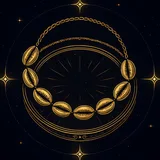
Cowrie shell divination (known as "búzios" in Brazil) is a form of omen divination that grew out of West African Yoruba religious traditions carried into Brazil’s Candomblé and Cuba’s Santería. Around sixteen cowrie shells are thrown, and the answer is read from the combination of shells that land open or closed.
Overview
- System
- Omen Reading (reads the combination of open and closed shells after they are thrown)
- Origin
- West Africa → Brazil / Cuba
- What You Need
- Around sixteen cowrie shells
- Best For
- Life, love, work
- Time Frame
- Days ahead, 90 days
Origins & History
Cowrie shell divination developed from the divination practices of the West African Yoruba religion, which were carried across the Atlantic slave trade and passed down and further developed within Afro-Brazilian and Afro-Cuban religious traditions such as Candomblé and Santería. It is known as "búzios" in Brazil and "dilogún" in Cuba and elsewhere. Around sixteen cowrie shells are thrown, and a priest reads the message of the spirits from the combination in which the shells land face up or face down.
As in Ifá, a large number of signs (odù) are passed down, and the practice extends beyond simple either-or judgments to address a wide range of concerns, including life, love, and work. It continues to be practiced today by trained priests within the Afro-Brazilian and Afro-Cuban religious communities.
How It Works
- 01Decide on the question you want to ask.
- 02Throw the cowrie shells together (a digital version uses a random draw).
- 03Check the combination of shells that land open and closed.
- 04Read the meaning associated with that combination alongside the question.
What It Reveals
This is well suited to a wide range of concerns about life direction, love, and work. It is properly a system read by trained priests after long study, and a simplified version can reproduce only part of the depth and ceremonial meaning found in the traditional practice.
What a búzios reading actually looks like
Unlike a deck of cards that anyone can buy and shuffle, búzios divination is, in its tradition, a priestly craft. The person who casts the shells is a babalorixá or ialorixá — a Candomblé priest or priestess trained through years of initiation and study — and the consultation typically takes place in a terreiro, a space prepared for it. The set used in Brazil is the merindilogun, the Yoruba name for the sixteen cowrie shells.
During the consultation, the priest greets the orixás, focuses on the question, and casts the shells onto a table or tray. The pattern that forms — how many land with the opening facing up ("open") and how many facing down ("closed") — corresponds to an odù, a kind of "letter" of the answer. Each odù carries its own stories, guidance, and areas of life, and also points to which orixá is answering that particular question.
The reading rarely ends with the diagnosis itself. The priest translates the odù into practical guidance — paths to follow, precautions to take — and, where appropriate, points to ritual care specific to the religion. This is why the tradition insists that búzios divination cannot be learned in a weekend: it presupposes the full religious training of whoever interprets it.
Terms used in búzios divination
- Búzio
- A sea shell prepared so that it lands "open" or "closed" when thrown.
- Merindilogun
- The Yoruba name for the sixteen-shell casting practiced in Brazilian Candomblé.
- Odù
- Each pattern formed by the open and closed shells — the "letter" that gives the answer and carries its own stories and guidance.
- Orixá
- A deity of the Yoruba pantheon. The reading identifies which orixá is answering the question asked.
- Babalorixá / Ialorixá
- A Candomblé priest and priestess — in the tradition, the only ones trained to cast búzios.
- Terreiro
- A house of worship in Afro-Brazilian religions, where the consultation traditionally takes place.
- Dilogún
- The name by which the practice is known in Cuban Santería, which shares the same Yoruba root.
Free online búzios: what to expect
Free digital versions of búzios divination replace the physical casting with a random draw and show a brief interpretation of the result. They serve a real purpose: introducing the mechanics of the reading and the tradition’s vocabulary to newcomers.
What they cannot replace is the real consultation. Without a priest, there is no one to read the odù in light of your actual situation, nor anyone to point to the paths and precautions the tradition attaches to each answer. If the question is a serious one, the respectful path is to seek out a trusted terreiro or priest — and to treat the online versions as an introduction, not the reading itself.
Frequently Asked Questions
- What is búzios (cowrie-shell) divination?
- It is a form of divination from West African Yoruba religious traditions, passed down through Brazilian Candomblé and Cuban Santería, in which around sixteen cowrie shells are thrown and the answer is read from the combination that land open or closed.
- How does búzios divination work?
- You settle on a question, throw the shells together, and check how many land face open and how many face closed. Each combination corresponds to a set of signs (odù), interpreted by a trained priest in light of the question asked.
- What can you ask in a búzios reading?
- The practice goes beyond simple yes-or-no answers and covers a wide range of concerns, including life direction, love, and work.
- Does online búzios divination work?
- Digital versions use a random draw in place of the physical casting. They let you experience the mechanics of the reading, but reproduce only part of the depth and ceremonial meaning of the traditional practice, which is conducted by trained priests.
- What is the difference between búzios divination and Ifá?
- Both come from West African Yoruba traditions and pass down a large number of signs (odù). Búzios divination uses the casting of cowrie shells and developed in Brazil and Cuba; Ifá is the original priestly system, with its own instruments and training.
- Who can perform a búzios reading?
- In the tradition, only trained priests — babalorixás and ialorixás of Candomblé (and their equivalents in Santería). The practice presupposes initiation and years of religious training; it is not a technique you can pick up on your own for immediate use.
Related Methods



References
- Wikipedia: Cowrie-shell divination (https://en.wikipedia.org/wiki/Cowrie-shell_divination)