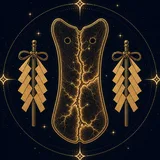
FUTOMANI
What is Futomani?
Futomani is a form of divination said to have been practiced in ancient Japanese Shinto. It is said that the will of the gods was read from the pattern of cracks produced by burning deer bone, and accounts of it appear in the Kojiki and the Nihon Shoki. It is no longer practiced as an everyday form of divination today, and survives only as a historical practice.
Overview
- System
- Omen Reading (a historical omen-based divination, symbolically reproduced here using random selection)
- Origin
- Japan (Shinto)
- What You Need
- Deer bone (used historically; represented today by a symbolic random draw)
- Best For
- Life direction and timing
- Time Frame
- Historical / past (no longer practiced day to day)
Origins & History
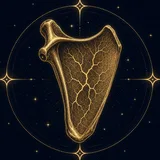
Futomani is a form of divination said to have read fortune from the pattern of cracks produced by burning a deer’s shoulder blade with wood from the hahaka tree (a type of bird cherry, Prunus grayana). It appears in the Kojiki and the Nihon Shoki, and is said to have been used in important decisions of state. Archaeological evidence confirms that bone-burning divination was practiced from the Yayoi period through the Heian period.
Primary sources describing the specific method of reading and the finer details of interpretation are limited, and much about the practice remains unknown. Today, traces of it survive as a Shinto rite at some shrines, but it is no longer widely practiced as an everyday form of divination and is regarded as a historical practice.
How It Works
- 01Decide on a single question you want to ask.
- 02No actual bone-burning ritual is performed; instead, one pattern is randomly selected from a set of pre-prepared crack patterns.
- 03Review the historical explanation associated with the selected pattern.
- 04Receive it as a symbolic suggestion, in remembrance of the ancient practice.
What It Reveals
Futomani is well suited as an entry point into the history of ancient Japanese divination and the cultural background of decision-making in Shinto. It cannot reproduce the ritual itself as it was once performed, and modern primary sources are limited, so it is not suited to use as a divination that provides definitive answers for real decision-making.
Related Methods
References
- 太占 - Wikipedia (https://ja.wikipedia.org/wiki/%E5%A4%AA%E5%8D%A0)