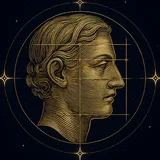
WESTERN PHYSIOGNOMY
What is Western Physiognomy?
Western physiognomy is a European system of face-reading, originating in ancient Greece, that interprets personality and life tendencies from the shape and balance of facial features such as the forehead, eyebrows, eyes, nose, mouth, and jawline. It has developed as a separate tradition from East Asian face reading.
Overview
- System
- Form Reading (reads from the shape of the face)
- Origin
- Europe (ancient Greece)
- What You Need
- A photo of the face
- Best For
- Career, life
- Time Frame
- Life as a whole
Origins & History
Western physiognomy is said to originate in ancient Greece, and the treatise Physiognomonica, attributed to Aristotle, sets out ideas linking facial features and build to character. It has attracted interest as a branch of philosophy since ancient times.
In the late 18th century, the Swiss pastor Johann Kaspar Lavater systematically compiled correspondences between facial features and character in his work Physiognomic Fragments, which gained great popularity across Europe. It has developed as its own distinct tradition, differing in both origin and system from East Asian face reading, which traces back to China.
How It Works
- 01Upload a front-facing photo of the face to be read.
- 02Detect the shape and size of facial features such as the forehead, eyebrows, eyes, nose, mouth, and jawline.
- 03Map the detected features onto the typologies of Western physiognomy dating back to ancient Greece.
- 04Combine the traditional meanings assigned to each feature to read tendencies in personality and career.
What It Reveals
Western physiognomy is well suited to reading innate personality tendencies and aptitude in career. At the same time, interpretations of facial features vary considerably across eras and commentators, and because it is a different system from East Asian face reading, the two should not simply be equated. Nor is it a system for declaring a person’s life course based on temporary changes such as expression or physical condition.
Related Methods




References
- Wikipedia: Physiognomy (https://en.wikipedia.org/wiki/Physiognomy)
- Wikipedia: Johann Kaspar Lavater (https://en.wikipedia.org/wiki/Johann_Kaspar_Lavater)